Struggling to find a handmade supplier for large, consistent orders? The unique appeal is there, but quality issues and small batches are a constant frustration. A solution now exists.
Yes, consistent capacity in handmade crafts is absolutely possible. It requires a unique blend of traditional artistry and modern process management. By organizing skilled artisans, using digital tools, and innovating production techniques, suppliers can achieve scalability and stable quality for bulk orders, meeting business needs.

I spent seven years in the textile trade. During that time, many of my European clients asked for unique, handmade products. But the story was always the same. The orders were small because the prices were too high, production couldn't be scaled, and quality was all over the place. I met countless talented artisans, but none could meet the demand for bulk orders with stable quality at a fair price. I almost gave up on the idea. It felt like an impossible dream for my clients. Then, everything changed on a trip to Guizhou, where I met one remarkable person who had solved this puzzle.
How Can Traditional Crafts Overcome Scalability Issues?
Your brand needs thousands of handmade items, but individual artisans can only produce a few. This production bottleneck stalls your growth and makes planning a nightmare. The solution isn't replacement, but empowerment.
Traditional crafts overcome scalability by creating a structured production network. This involves establishing multiple workshops, standardizing certain processes, and using technology for project management. This system allows for a massive increase in output while maintaining strict quality control across all pieces.

The first thing that struck me about Mr. Liu's operation was its structure. He didn't build one giant, soulless factory. Instead, he built a powerful network. He established 33 distinct workshops across several counties in the region. This decentralized model was brilliant. It brought the work to the artisans, respecting their local communities and traditions. Today, he works with over 3,300 skilled embroiderers. These are not factory workers; they are craftswomen carrying on a legacy. By connecting them through a central system, he solved the core problem of scale. One person can only embroider so much, but 3,300 people working in a coordinated system can produce incredible volume. This structure provides the flexibility and capacity that B2B clients desperately need. It turns a collection of individual artists into an organized, reliable production force.
| Component | Function |
|---|---|
| Central Management | Handles logistics, quality control, and client communication. |
| Workshop Network | Organizes artisans into 33 local hubs for bulk production. |
| 3,300+ Artisans | Provide the skilled handwork that makes each product unique. |
Can Technology Really Improve Handmade Quality and Lower Costs?
The high cost and inconsistent quality of handmade products make them a risky investment. You are often forced to choose between authentic craft and profitable, consistent inventory. But technology can solve this dilemma.
Absolutely. Technology can significantly improve handmade processes. Digital tools for embroidery drafts ensure every artisan works from the same pattern. Innovations in natural dyeing create consistent colors. These smart integrations reduce errors, waste, and costs, leading to a higher quality, more affordable product.

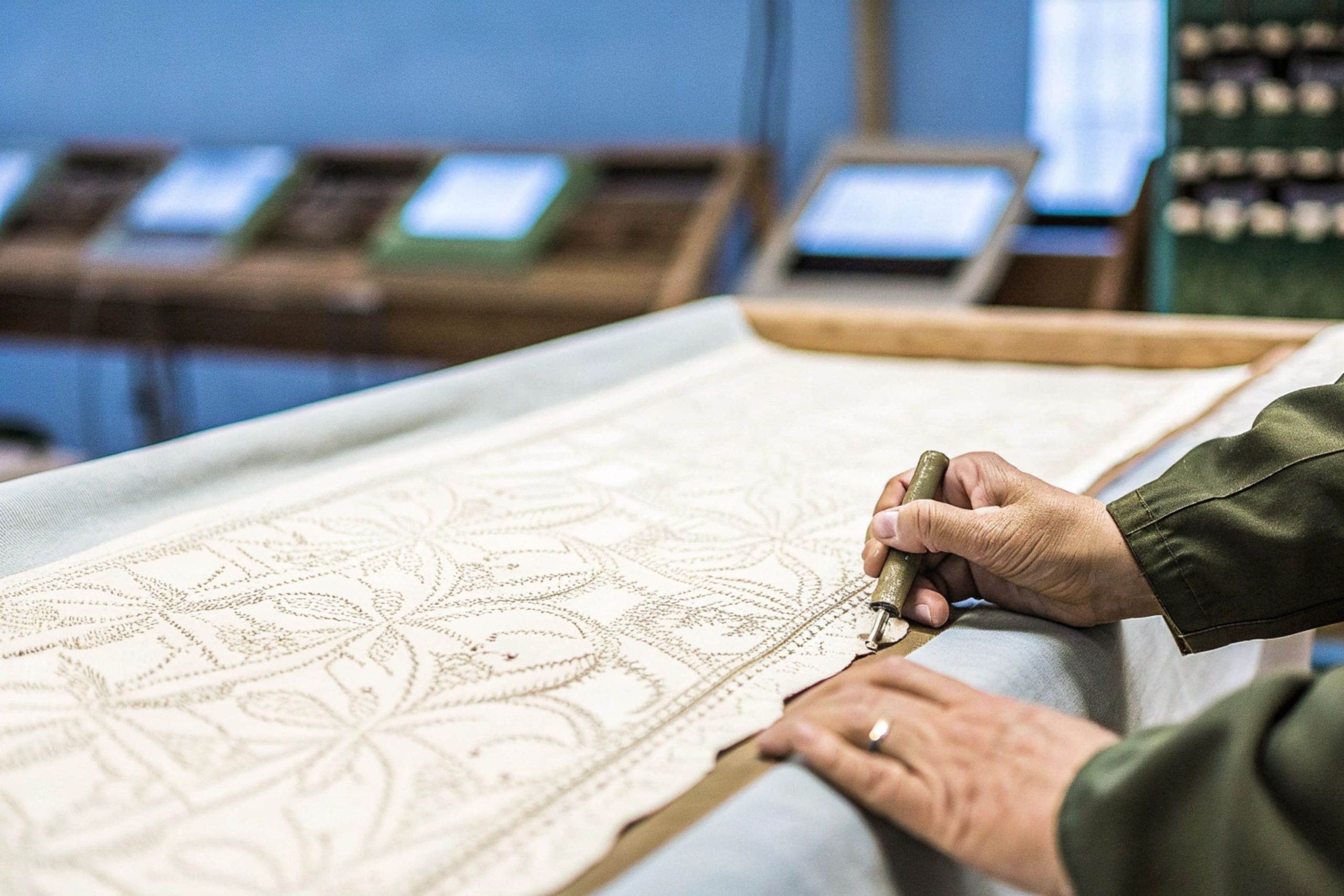
Mr. Liu understood that to make handmade crafts viable for the global market, he had to innovate. But he did it in a way that supported, rather than replaced, the artisan. His key innovations completely changed the game. For example, they developed a system for the digitalization of hand embroidery drafts. This means every artisan starts with a perfect, identical pattern transferred to the fabric. The embroidery is still 100% by hand, but the inconsistency in shape and size is eliminated. In their dyeing process, they use pneumatic automatic controls. Plant-based dyes are beautiful but notoriously difficult to control. This technology ensures precise temperature and timing, resulting in consistent color batches every single time. This was a huge breakthrough. These process improvements, from color overlay dyeing to continuous pattern techniques, make complex designs more efficient to produce. This reduces labor time, minimizes waste, and ultimately lowers the cost without sacrificing the handmade soul of the product.
| Process | Traditional Method | Our Innovative Method |
|---|---|---|
| Pattern Transfer | Hand-drawn, prone to variation. | Digital draft, 100% consistent. |
| Plant Dyeing | Manual vat control, inconsistent color. | Pneumatic control, stable color batches. |
| Complex Designs | Slow, multi-step manual process. | Streamlined techniques, improved efficiency. |
What Does a Scalable Handmade Product Development Process Look Like?
You have a great product idea, but finding a supplier who can quickly create handmade samples is difficult. Long sampling times delay your launch and give competitors an advantage. A dedicated R&D team changes that.
A scalable handmade development process involves a dedicated R&D team separate from bulk production. This team, made of the most skilled artisans, focuses exclusively on creating new designs and prototypes. With a capacity for hundreds of new samples monthly, they can quickly bring a client's vision to life.

The final piece of the puzzle for me was seeing their product development process. It was as professional and structured as any modern manufacturing facility. Mr. Liu created a dedicated R&D team of over 110 of his most experienced embroiderers. These women are masters of multiple intangible cultural heritage crafts, giving them an incredible depth of skill to create new and exciting designs. Their sole focus is on innovation and sampling. They are not pulled into daily production orders, which allows them to move incredibly fast. This team has the capacity to produce 500 new and unique samples every single month. For a B2B client, this is a dream come true. It means we can go from an idea to a physical sample in a fraction of the time it would normally take. The process is clear and reliable, giving you the confidence to build your product line with us.
Here is how it works:
- Client Brief: You provide your idea, sketches, or inspiration.
- Material Sourcing: Our team selects the perfect natural fabrics and threads.
- Digital Draft: The design is digitized to ensure consistency.
- Master Artisan Sampling: One of our 110+ experts creates the first prototype by hand.
- Review & Refine: We get your feedback for any adjustments.
- Final Sample: The approved sample is sent to you for final sign-off.
Conclusion
Consistent capacity in handmade crafts is no longer a dream. Through organized networks and smart innovation, we deliver the authentic, scalable products your brand needs to succeed and grow.